
Key Takeaways
- Start with the rifle’s actual purpose, terrain, expected distance, and intended game species.
- Fit, manageable recoil, and regular practice matter more than maximum power or cosmetic features.
- Optics, ammunition, a sling, and weather-ready field gear all contribute to a dependable setup.
- Toronto-area owners should plan range time before traveling north or west for an Ontario hunt.
- Safe storage, lawful transport, and current hunting requirements should be confirmed before every trip.
For Toronto and Greater Toronto Area shooters, a rifle setup should work as well at a supervised range as it does during a wet autumn morning in Ontario’s mixed woods. Before comparing models, define what the rifle must do, how often it will be used, and whether it will spend more time on the bench, in a vehicle case, or carried over uneven ground.
When comparing firearm supplies Canada options, Toronto-based Al Flaherty’s Outdoor Store offers a dedicated non-restricted rifle category alongside related ammunition, optics, maintenance equipment, cases, locks, and shooting accessories. Located on Dufferin Street, the retailer is a useful starting point for GTA customers who want to compare the connected parts of a practical range or hunting setup rather than treating the rifle as a stand-alone purchase.
Table of Contents
- Start With the Rifle’s Main Purpose
- Check Fit, Weight, and Comfort
- Choose a Cartridge With Care
- Match the Optic to the Distance
- Build a Simple Range Practice Plan
- Pack the Right Field Gear
- Plan Safe Transport and Storage
- Use a Pre-Purchase Checklist
- Complete a Final Safety Check
1. Start With the Rifle’s Main Purpose
Purpose should lead the decision, not brand recognition, finish, or a sale price. A rifle intended primarily for regular range practice benefits from manageable operating costs, comfortable recoil, and straightforward maintenance. A rifle for big-game hunting needs to suit the species, legal hunting method, terrain, and likely shot distances. For a backcountry trip, total carry weight, weather resistance, and reliability can become more important than extra accessories.
Many Ontario owners need a balanced, mixed-use setup. That usually means choosing practical features that support frequent practice and safe field use, rather than building around extreme magnification, excessive weight, or an unnecessarily powerful cartridge.
2. Check Fit, Weight, and Comfort
A rifle that fits the shooter promotes steadier handling and a more repeatable sight picture. Check length of pull, grip shape, trigger reach, and how naturally the stock settles into the shoulder. Also assess the complete package, not only the bare rifle. A scope, mounts, sling, loaded magazine, and case can noticeably change how equipment feels on the range and during a long walk.
What to Handle Before Buying
- Shoulder the unloaded rifle and confirm the eye reaches a natural sight position.
- Check whether the balance feels controlled when using a sling.
- Consider recoil comfort across a full practice session, not only a few shots.
- Make sure the overall weight is reasonable for the expected terrain.
A new hunter may shoot a lighter, moderate-recoiling rifle more confidently than a heavier-recoiling option. Consistent, accurate practice is more valuable than choosing more power than the intended hunt requires.
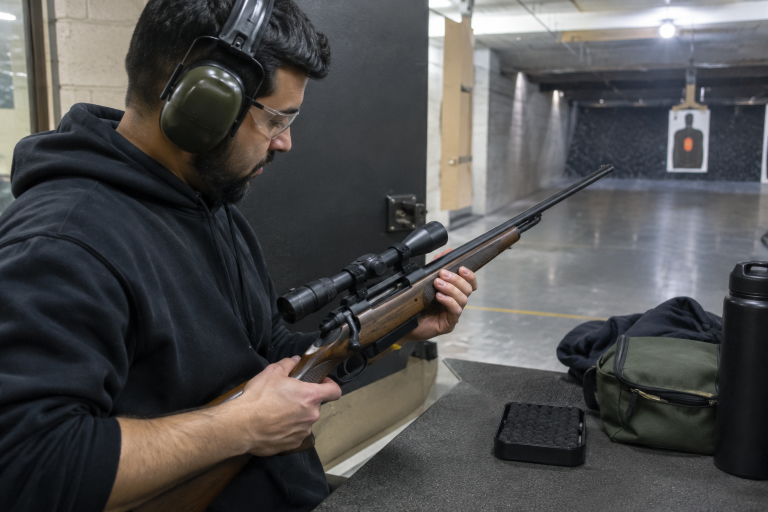
3. Choose a Cartridge With Care
Cartridge selection is a practical balance among lawful use, game size, expected range, ammunition availability, cost, recoil, and the shooter’s ability to practice. Bullet construction and careful shot placement remain essential considerations. Before a hunt, review the current Ontario Hunting Regulations Summary for species-specific seasons, equipment restrictions, licences, tags, and local rules.
Ask simple questions: What species will be hunted? What distances are realistic where you hunt? Can you afford enough ammunition to train throughout the year? Will the rifle remain comfortable when shooting from supported and field positions? Clear answers prevent a purchase that is impressive on paper but poorly suited to the owner.
4. Match the Optic to the Distance
More magnification is not automatically more useful. In thick cover, a clear, low-power view and a generous field of view can help the shooter quickly find a safe sight picture. In more open country, additional magnification may assist with precise aiming when the shooter has a stable position and enough time. Eye relief, reticle design, low-light clarity, mount height, and resistance to weather changes should all be considered.
Mount the optic securely, establish a comfortable eye position, and confirm zero with the ammunition you intend to use. A scope supports sound fundamentals. It does not replace careful trigger control, a stable rest, or a responsible decision to pass on an uncertain shot.
5. Build a Simple Range Practice Plan
- Inspect the rifle, confirm it is unloaded, and follow all range commands.
- Begin at a short distance using a stable rest to confirm the sighting system.
- Fire small, deliberate groups instead of rushing through a large amount of ammunition.
- Record the ammunition, distance, weather conditions, and group results.
- Change one variable at a time when adjusting equipment or technique.
- When permitted, finish with a few controlled positions that may be useful in the field.
Formal instruction can help newer owners develop safe habits and correct problems early. Regular practice also makes it easier to recognize loose mounts, changing zero, or discomfort that should be addressed before hunting season.
6. Pack the Right Field Gear
Accessories should solve real problems, not add clutter. A properly fitted sling helps manage carry weight. Lens covers and a soft cloth protect the optic from rain, dust, and fingerprints. Compact tools can address basic adjustments, while hearing and eye protection remain important for range sessions.
- A secure transport case and appropriate locking equipment.
- Extra batteries for illuminated optics or electronic range devices.
- A notebook or phone record containing zero data and ammunition details.
- Weather-appropriate clothing and required high-visibility garments.
- A small inspection kit for the bore, action, sling hardware, and optic mounts.
7. Plan Safe Transport and Storage
A rifle plan is incomplete without a storage and transport plan. Firearm classification, destination, and the type of trip can affect the applicable requirements. The RCMP guidance on firearms safety, training, transport, and storage is a useful resource for reviewing federal responsibilities before traveling.
Unload before transport, keep the firearm secured as required, avoid leaving it unattended in a vehicle, and keep required licenses or hunting documentation available. If a trip involves another province or unfamiliar hunting area, check the relevant rules again shortly before departure.
8. Use a Pre-Purchase Checklist
- Does this rifle match its primary use?
- Does it fit comfortably with the intended optic installed?
- Can the owner practise regularly with its ammunition and recoil level?
- Does the optic suit the local terrain and realistic distances?
- Are safe home storage and secure transport already planned?
- Have current hunting and firearm requirements been reviewed?
9. Complete a Final Safety Check
Before a range day or hunt, inspect the bore, action, stock, sling, optic mounts, fasteners, case, and locking equipment. Confirm the ammunition is appropriate for the planned activity and that the rifle remains zeroed. Any damaged, loose, or questionable component deserves attention from a qualified professional before use.
A well-planned Toronto, Ontario rifle setup is built around purpose, fit, practice, and responsible ownership. The best choice is not necessarily the most expensive or powerful. It is the one that is comfortable, reliable, lawful for its intended use, and supported by careful preparation every time it leaves storage.

