
Introduction
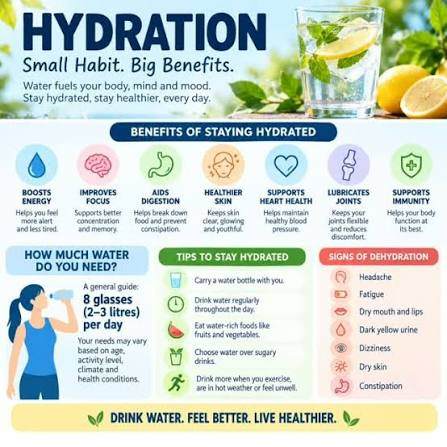
A Guide to Staying Hydrated , Staying hydrated is one of the most important habits for maintaining good health and overall well-being. Water plays an essential role in almost every function of the human body, including digestion, circulation, temperature regulation, and waste removal. Despite its importance, many people do not drink enough fluids throughout the day. Dehydration can affect energy levels, concentration, physical performance, and general health. Understanding how much water your body needs and developing healthy hydration habits can help you feel better and maintain an active lifestyle.
1. Why Is Hydration Important?
A Guide to Staying Hydrated , Water makes up approximately 50–70% of the human body and supports several essential functions. Proper hydration helps maintain the balance of bodily fluids, allowing organs and tissues to function efficiently.
Some major benefits of staying hydrated include:
- Regulates Body Temperature: Water helps control body temperature through sweating and other natural processes.
- Supports Digestion: Drinking enough water helps break down food, supports bowel movements, and reduces the risk of constipation.
- Improves Brain Function: Proper hydration supports concentration, memory, and mental alertness.
- Maintains Kidney Health: Water helps the kidneys remove waste products through urine.
- Supports Joint Health: Water contributes to the lubrication and cushioning of joints.
- Boosts Physical Performance: Staying hydrated helps maintain stamina and reduces the risk of fatigue during exercise.
2. How Much Water Should You Drink Daily?
Daily water requirements vary depending on age, body weight, physical activity, weather conditions, and overall health. There is no single amount that works for everyone.
A commonly used general guideline for healthy adults is approximately 2–3 litres of fluids daily, although individual needs can be higher or lower. Remember that water obtained from foods, fruits, vegetables, milk, and other beverages also contributes to total fluid intake.
People living in hot climates or exercising regularly may need additional fluids because they lose more water through sweating.
3. Signs That Your Body Needs More Water
Recognizing early signs of dehydration can help prevent more serious problems. Common symptoms include:
- Feeling thirsty frequently.
- Dark yellow urine.
- Dry mouth and lips.
- Headaches or dizziness.
- Unusual tiredness and weakness.
- Reduced urination.
- Difficulty concentrating.
Severe dehydration may cause confusion, fainting, rapid heartbeat, and very little urination. These symptoms require urgent medical attention.
4. Best Ways to Stay Hydrated Throughout the Day
Developing a consistent drinking routine makes hydration easier. Here are some practical strategies:
Start Your Morning with Water: Drink a glass of water after waking up to replenish fluids lost during sleep.
Carry a Water Bottle: Keeping a reusable bottle nearby encourages regular drinking throughout the day.
Drink Before and After Exercise: Replace fluids lost through sweating, especially after walking, running, or other physical activities.
Eat Water-Rich Foods: Include watermelon, cucumber, oranges, strawberries, tomatoes, and lettuce in your meals.
Set Hydration Reminders: Use phone reminders or a daily schedule if you frequently forget to drink water.
Drink More During Hot Weather: Increase fluid intake when temperatures rise or when spending time outdoors.
5. Foods and Drinks That Help Maintain Hydration
Water is the best everyday choice for hydration, but several foods and beverages also contribute to fluid intake.
Examples include:
- Watermelon and melon.
- Cucumbers and tomatoes.
- Oranges and grapefruit.
- Strawberries and peaches.
- Soups and broths.
- Milk and unsweetened beverages.
Tea and coffee also contribute to daily fluid intake when consumed in moderate amounts. However, sugary drinks and energy drinks should not become regular hydration choices because of their added sugar and other ingredients.
6. Common Hydration Mistakes to Avoid
Many people unknowingly develop habits that make proper hydration difficult. Some common mistakes include:
- Waiting until extreme thirst develops before drinking water.
- Drinking excessive amounts of water in a short period.
- Ignoring hydration during physical activity.
- Consuming too many sugary beverages.
- Assuming everyone needs exactly eight glasses of water daily.
- Ignoring signs of dehydration during hot weather.
Drinking too much water can also be harmful because it may dilute sodium levels in the blood. Therefore, hydration should be balanced according to individual needs.
7. Hydration Tips for Different Lifestyles
Different lifestyles require different hydration strategies. Office workers should keep water nearby and take regular drinking breaks. People who exercise should replace fluids lost through sweating. Older adults should maintain a regular drinking routine because their thirst sensation may become less noticeable.
Children need regular access to drinking water, particularly during outdoor activities and hot weather. People with kidney, heart, or other medical conditions should follow their healthcare professional’s advice regarding fluid intake.
8. Benefits of Building a Hydration Routine
Making hydration part of your daily routine can improve general comfort, support normal body functions, and help prevent dehydration-related problems. Consistent fluid intake also supports healthy digestion, physical activity, and temperature regulation.
Rather than drinking large quantities at once, spread your fluid intake throughout the day and adjust it according to your activity level and environment.
Conclusion
Staying hydrated is a simple but powerful way to support overall health. Water helps regulate body temperature, maintain digestion, protect kidney function, and support physical and mental performance. By drinking water regularly, eating water-rich foods, and adjusting fluid intake according to weather and activity levels, anyone can develop healthier hydration habits. Remember that the goal is not simply to drink more water but to maintain the right balance for your body’s needs.


