
Introduction
A Guide to Daily Exercise for Beginners , Daily exercise is one of the most effective ways to improve physical health, mental well-being, and overall quality of life. However, starting a fitness routine can feel challenging for beginners, especially those who have busy schedules or have not exercised regularly. The good news is that you do not need an expensive gym membership or special equipment to become more active. Simple activities such as walking, stretching, and bodyweight exercises can make a significant difference. With consistency, patience, and realistic goals, anyone can develop a healthy exercise habit.
1. Understand the Benefits of Daily Exercise
A Guide to Daily Exercise for Beginners , Regular physical activity offers numerous benefits for the body and mind. It strengthens muscles, improves heart health, supports healthy weight management, and increases stamina. Exercise can also improve sleep quality and help people feel more energetic throughout the day.
Physical activity supports mental well-being by reducing stress and improving mood. Activities such as walking outdoors or cycling can provide a refreshing break from work and daily responsibilities.
For beginners, the most important benefit is building a sustainable routine. You do not need to exercise intensely every day to experience positive changes. Even short periods of movement can contribute to better health.
2. Start with Simple Activities
Beginners should choose exercises that match their current fitness levels. Starting with difficult workouts may cause excessive soreness, fatigue, or injuries, making it harder to continue.
Walking is an excellent starting point because it is simple, affordable, and accessible to most people. Begin with 10 to 15 minutes of comfortable walking and gradually increase the duration as your stamina improves.
Other beginner-friendly activities include:
- Stretching: Helps improve flexibility and mobility.
- Cycling: Supports cardiovascular fitness and strengthens leg muscles.
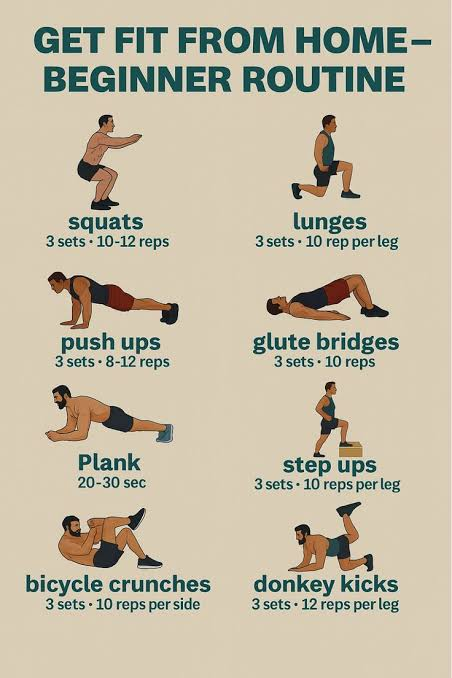
- Bodyweight exercises: Squats, wall push-ups, and gentle lunges help build strength.
- Low-impact aerobics: Provides movement without excessive jumping.
- Yoga: Combines gentle movements, balance, flexibility, and relaxation.
Choose activities you enjoy because they are easier to maintain over time.
3. Create a Realistic Exercise Schedule
A practical schedule helps beginners turn exercise into a regular habit. Instead of planning long workouts immediately, start with manageable sessions and increase your activity gradually.
For example, you could walk for 15 minutes on the first few days, then increase to 20 minutes as your fitness improves. Eventually, aim for approximately 150 minutes of moderate-intensity aerobic activity each week, alongside muscle-strengthening activities on at least two days, in line with widely used adult physical activity recommendations.
You can divide your weekly activity into shorter sessions that fit your lifestyle. Morning, afternoon, or evening exercise can all be effective. The best time is the one that allows you to remain consistent.
Remember that rest and recovery are also important. Beginners should avoid pushing themselves too hard when their muscles feel unusually tired or painful.
4. Warm Up and Cool Down Properly
Warming up prepares your body for physical activity and helps you transition into exercise comfortably. Spend approximately five minutes walking slowly, moving your arms, or performing gentle joint movements before a workout.
After exercising, cool down with a few minutes of slower movement. Gentle stretching can help maintain flexibility and improve comfort after physical activity.
Avoid forcing stretches or making sudden movements. If an exercise causes sharp pain, stop and reassess your technique. Proper preparation and recovery can make workouts safer and more enjoyable.
5. Maintain a Balanced Diet and Stay Hydrated
Exercise works best when combined with healthy eating and adequate hydration. Your body needs sufficient energy and nutrients to support movement, muscle recovery, and everyday activities.
Include vegetables, fruits, whole grains, beans, eggs, fish, or other suitable protein sources in your meals. Choose a balanced eating pattern rather than relying on restrictive diets or skipping meals to lose weight quickly.
Drink water regularly, especially in hot weather or when exercising outdoors. In warmer climates, choose cooler times of the day, wear lightweight clothing, and take breaks when needed.
6. Stay Motivated and Track Your Progress
Motivation often changes from day to day, so building habits is more reliable than depending entirely on enthusiasm. Set small, achievable goals, such as walking for 15 minutes five days a week.
Track your progress in a notebook or on your phone. Record your walking time, distance, energy levels, or the number of exercise sessions completed each week.
Celebrate improvements in stamina, sleep, and consistency rather than focusing only on weight. If you miss a workout, simply return to your routine the next day without feeling guilty.
7. Exercise Safely
Safety should always be a priority, particularly for people who are new to exercise or have existing health concerns. Wear comfortable shoes, use appropriate techniques, and increase workout intensity gradually.
Stop exercising if you experience chest pain, faintness, unusual severe breathlessness, or other concerning symptoms. Seek urgent medical attention for serious symptoms. If you have a chronic condition or significant health concerns, consult a healthcare professional before beginning a demanding exercise program.
Conclusion
Daily exercise does not need to be complicated, expensive, or exhausting. Beginners can improve their health by starting with simple activities, following a realistic schedule, eating balanced meals, and allowing enough time for recovery. The key to success is consistency rather than perfection. By taking small steps and gradually increasing activity, you can develop a sustainable fitness routine that supports a healthier body, a clearer mind, and a more active lifestyle.


