
Introduction
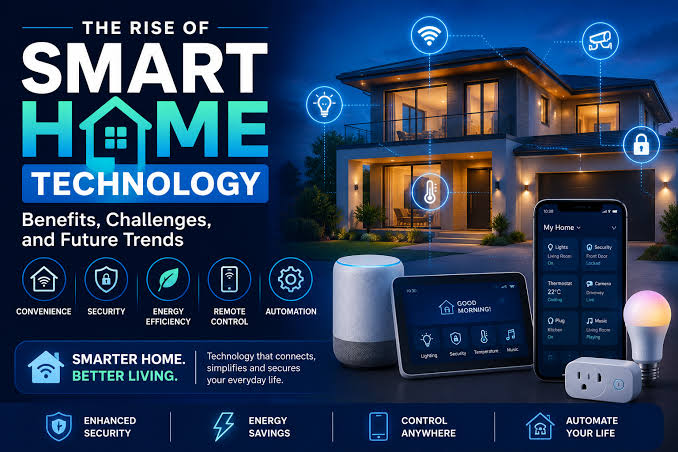
The Rise of Smart Homes: Benefits, Risks, and Future Trends, Technology is transforming the way people live, work, and manage their homes. One of the most significant developments in modern living is the rise of smart homes. A smart home uses internet-connected devices, sensors, and automation systems to control various household functions, including lighting, security, temperature, and entertainment. These technologies allow homeowners to manage their living spaces through smartphones, voice assistants, or automated settings.
As technology becomes more accessible, smart homes are gaining popularity worldwide. From smart doorbells to intelligent refrigerators, these innovations promise greater convenience, energy efficiency, and security. However, they also introduce challenges related to privacy, cybersecurity, cost, and reliability. Understanding the benefits, risks, and future trends of smart homes can help homeowners make informed decisions.
Products Used in Smart Homes
The Rise of Smart Homes: Benefits, Risks, and Future Trends, Smart homes consist of several connected products designed to simplify everyday activities. Some of the most popular categories include:
1. Smart Lighting: Smart bulbs and switches allow users to control lighting remotely, adjust brightness, and schedule automatic operation. Some systems can change lighting according to the time of day, helping reduce unnecessary electricity consumption.
2. Smart Security Systems: Smart cameras, video doorbells, motion sensors, and electronic locks provide additional home protection. Homeowners can receive alerts, monitor entrances, and check their properties remotely.
3. Smart Thermostats and Climate Control: These devices regulate indoor temperatures according to user preferences and daily routines. They can help reduce energy waste by adjusting heating or cooling when rooms are unoccupied.
4. Smart Appliances: Internet-connected refrigerators, washing machines, ovens, and robotic vacuum cleaners make household tasks more manageable. Certain appliances provide maintenance alerts, remote controls, and automated cleaning schedules.
5. Voice Assistants and Smart Hubs: Devices such as Amazon Echo and Google Nest allow users to operate compatible products through voice commands. Smart hubs can connect multiple devices and coordinate their functions through a single system.
Benefits of Smart Homes
One of the biggest advantages of smart homes is convenience. People can control lights, appliances, and security systems without physically operating each device. Automation also helps save time by handling repetitive tasks.
Energy efficiency is another important benefit. Smart lighting and climate-control systems can reduce unnecessary electricity use, potentially lowering utility bills. The actual savings depend on household habits, device settings, and local energy prices.
Smart security products provide greater visibility and control. Remote alerts and live camera feeds help homeowners monitor their properties while travelling or working away from home. Smart home technology can also improve accessibility for older adults and people with mobility limitations.
Furthermore, connected devices can create a more comfortable living environment by adjusting lighting, temperature, and entertainment according to individual preferences.
Risks and Disadvantages
Despite their advantages, smart homes present several risks. Privacy is a major concern because connected cameras, speakers, and other devices may collect personal information. Poor privacy settings or unclear data policies can expose sensitive details about household activities.
Cybersecurity is another challenge. Weak passwords, outdated software, and insecure networks can make devices vulnerable to unauthorized access. A compromised camera or smart lock may create serious security concerns.
Cost can also be a barrier. Purchasing compatible devices, upgrading home networks, and replacing outdated equipment may require a significant investment. Some products depend on subscriptions or internet connectivity, while devices from different manufacturers may not work together properly.
Finally, technical failures, power outages, and internet disruptions can interrupt automated functions. Homeowners should therefore maintain manual alternatives for essential systems.
Implementation of Smart Home Technology
Implementing smart home technology successfully begins with identifying practical needs. Homeowners should decide whether their main priorities are security, energy savings, convenience, or accessibility.
Start with affordable, useful products such as smart bulbs, motion sensors, or a video doorbell. Before purchasing devices, check compatibility with existing equipment and choose products that support established connectivity standards where possible.
Security should remain a priority throughout installation. Use strong, unique passwords, enable multifactor authentication when available, install software updates, and secure the home Wi-Fi network. Review privacy settings and disable unnecessary data collection features.
It is also wise to introduce automation gradually rather than connecting every appliance at once. Test each device, monitor electricity consumption, and evaluate whether the technology provides genuine value. Keep manual controls available for important functions such as door access and lighting.
Future Trends in Smart Homes
The future of smart homes will likely involve more advanced artificial intelligence, improved energy management, and better device compatibility. AI-powered systems may learn household routines and adjust settings automatically, while smart energy solutions could coordinate appliances with solar panels and home batteries.
Voice recognition, predictive maintenance, and connected healthcare technologies may also become more sophisticated. However, future progress will depend on stronger privacy protections, reliable connectivity, and affordable products.
Conclusion
Smart homes are changing modern living by offering convenience, improved security, and opportunities for energy savings. Nevertheless, privacy concerns, cybersecurity threats, compatibility issues, and initial costs require careful consideration. By choosing reliable products, following security best practices, and implementing technology gradually, homeowners can enjoy the benefits of a connected home while minimizing its risks. As innovation continues, smart homes are likely to become more intelligent, efficient, and accessible.


