
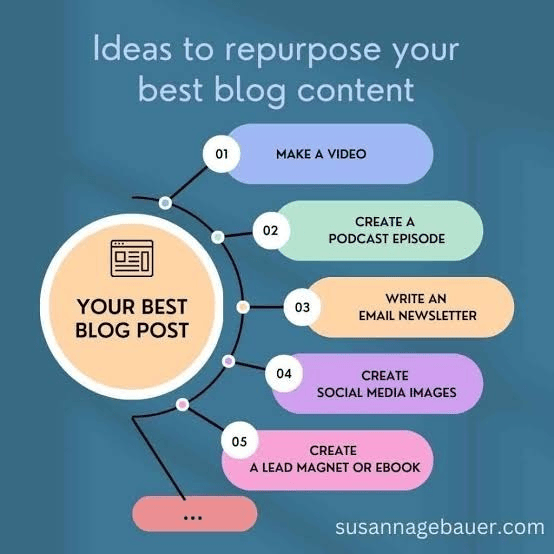
Ways to Repurpose One Blog Post Into Multiple Content Pieces ,Creating fresh content consistently can be challenging for bloggers, digital marketers, and business owners. Researching topics, writing articles, designing visuals, and optimizing content for search engines all require time and effort. However, there is a smarter way to maintain a consistent online presence without starting from scratch every time: content repurposing.
Content repurposing means transforming one existing blog post into several different content formats for multiple platforms. Instead of allowing a single article to reach readers only once, you can turn its information into social media posts, videos, infographics, email newsletters, podcasts, and other useful resources.
Here are some effective ways to repurpose one blog post into multiple content pieces.
1. Turn Your Blog Post Into Social Media Posts
Ways to Repurpose One Blog Post Into Multiple Content Pieces, Social media platforms provide excellent opportunities to share valuable information with different audiences. You can extract important points, statistics, tips, and interesting quotes from your original blog post.
For example, if your article discusses digital marketing strategies, you can create individual Facebook posts covering each strategy. LinkedIn can feature professional insights, while Instagram can present short tips through attractive graphics.
You can also divide a long article into several smaller posts and publish them throughout the week. This approach keeps your social media accounts active and directs more visitors toward your website.
2. Create an Infographic
Infographics transform complicated information into simple, visually appealing content. They are particularly useful for articles containing statistics, comparisons, processes, and step-by-step instructions.
Start by identifying the most important information in your blog post. Organize it into short sections, add relevant icons, and use a clean design with readable fonts.
For example, a blog post about healthy lifestyle habits could become an infographic highlighting ten practical daily habits.
Tools such as Canva make infographic creation easier, even for beginners. Share your infographic on Pinterest, Instagram, Facebook, and your website to reach different audiences.
3. Convert Your Article Into a Video
Video content is increasingly important because many people prefer watching short explanations instead of reading lengthy articles.
You can convert your blog post into a short educational video by selecting its main ideas and writing a simple script. Add relevant images, captions, background visuals, and voice narration.
For instance, a 700-word article about time management could become a three-minute YouTube video or several short Instagram Reels.
You do not always need expensive recording equipment. Free or affordable video editing tools can help you create professional-looking content.
4. Develop an Email Newsletter
Your existing blog content can also become valuable material for email marketing.
Select the most useful information from your article and present it in a shorter, reader-friendly newsletter. Include an interesting subject line, a brief introduction, practical advice, and a link to the complete blog post.
For example, an article about saving money can become a weekly newsletter featuring five simple budgeting tips.
Email newsletters help maintain relationships with existing readers and encourage them to revisit your website.
5. Turn Key Ideas Into a Podcast
Podcasts are another effective way to reach audiences who enjoy listening to educational content while travelling, exercising, or completing everyday tasks.
You can use your original blog post as the foundation for a podcast episode. Expand important points with personal experiences, examples, explanations, and practical recommendations.
A single article can also provide ideas for multiple podcast episodes if it covers several related topics.
Keep the discussion natural rather than simply reading the article word for word. This makes the podcast more engaging and conversational.
6. Create a Carousel for Social Media
A carousel is a collection of slides that users can swipe through on platforms such as Instagram and LinkedIn.
Break your blog post into small sections and present each major point on a separate slide. Start with an attention-grabbing title, explain the key ideas, and finish with a call to action.
For example, an article about avoiding online shopping scams could become a seven-slide carousel explaining common warning signs and prevention methods.
Carousels make educational information easier to understand and encourage users to interact with your content.
7. Transform Your Article Into a Short Guide or Checklist
Some blog posts contain information that readers may want to save and use later. You can convert these articles into downloadable PDF guides, practical checklists, or worksheets.
For example, a blog post about starting an online business could become a checklist covering business planning, website development, marketing, and customer management.
These resources provide additional value to readers and can also help you build an email subscriber list.
8. Publish Short Tips and Quotes
Every detailed article contains smaller ideas that can stand independently as short content pieces.
Extract useful sentences, practical recommendations, memorable statements, and important lessons. Turn them into quote graphics, short posts, or quick tips.
This strategy works particularly well for platforms where users prefer brief and easily digestible information.
9. Improve SEO Through Content Repurposing
Content repurposing can support your search engine optimization strategy when each new format provides genuine value.
Update the original article with relevant information, improve internal links, add descriptive images, and optimize headings. You can also create related articles that explore individual sections in greater detail.
Use relevant keywords naturally and link supporting content back to the original article where appropriate.
Avoid publishing identical content across multiple pages simply to increase website size. Every new piece should serve a distinct purpose and audience.
10. Measure Performance and Improve Your Strategy
Publishing repurposed content is only one part of an effective content marketing strategy. You should also measure its performance.
Track website traffic, social media engagement, video views, email clicks, and audience responses. Identify which formats generate the most engagement and website visits.
Use these insights to improve future content campaigns. Focus more on the platforms and formats that provide meaningful results rather than publishing everywhere without a clear strategy.
Conclusion
Repurposing one blog post into multiple content pieces is an effective way to save time, increase audience engagement, and maximize the value of existing content. A single article can become social media posts, infographics, videos, newsletters, podcasts, checklists, and much more.
The key is to adapt information according to each platform instead of copying and pasting the same material everywhere. With proper planning, creativity, and performance tracking, content repurposing can strengthen your digital marketing strategy, improve brand visibility, and generate consistent traffic to your website.


